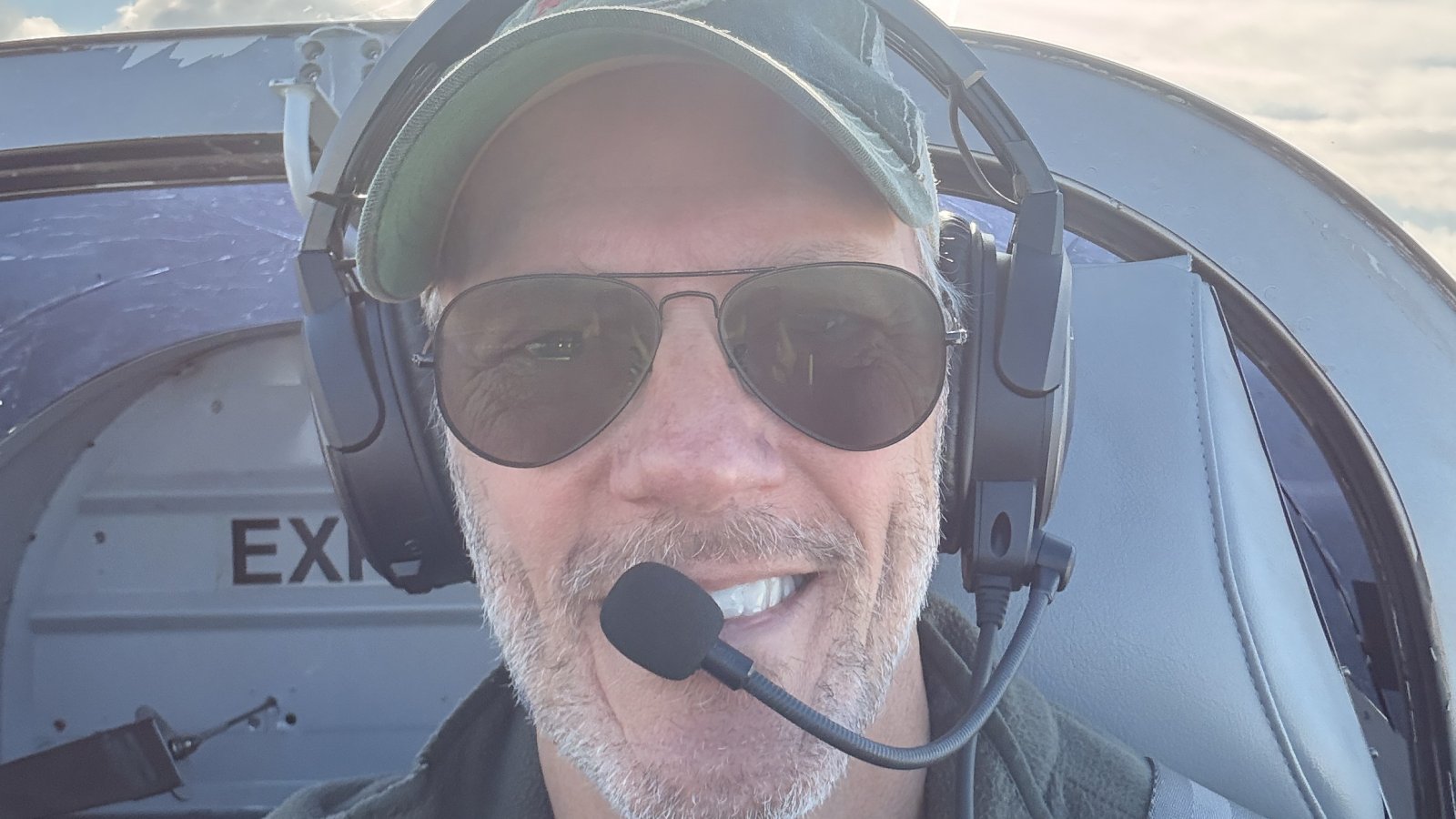
When I flew, the world ceased to exist.
Not literally, of course. The world was still there, stretching out beneath me, waiting to be seen from a perspective that never ceased to amaze me. But the noise of everyday life, the pressures, the responsibilities, and the stress all seemed to disappear.
There was just me, my plane, my skill, and a world around me that needed viewing from above.
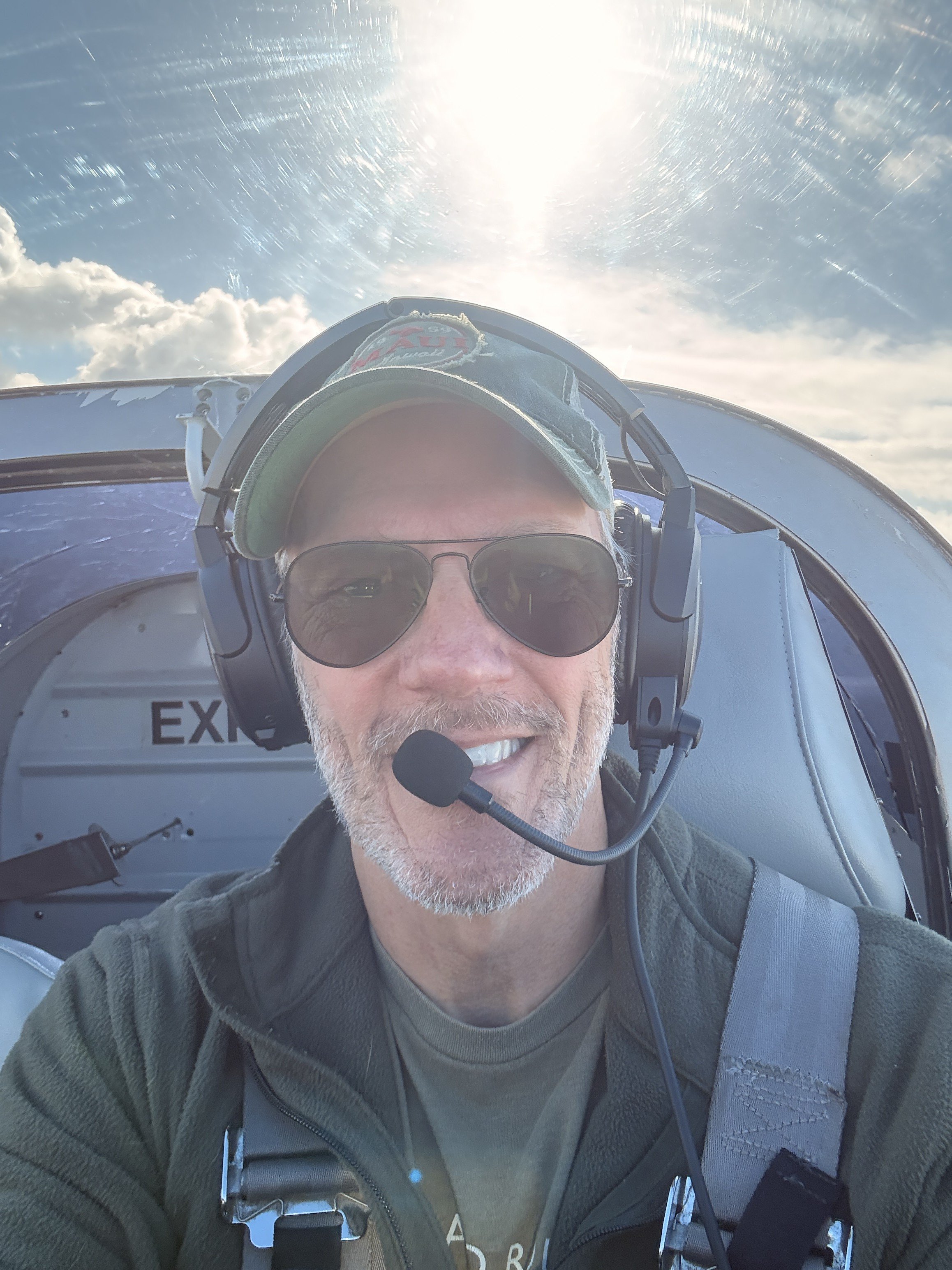
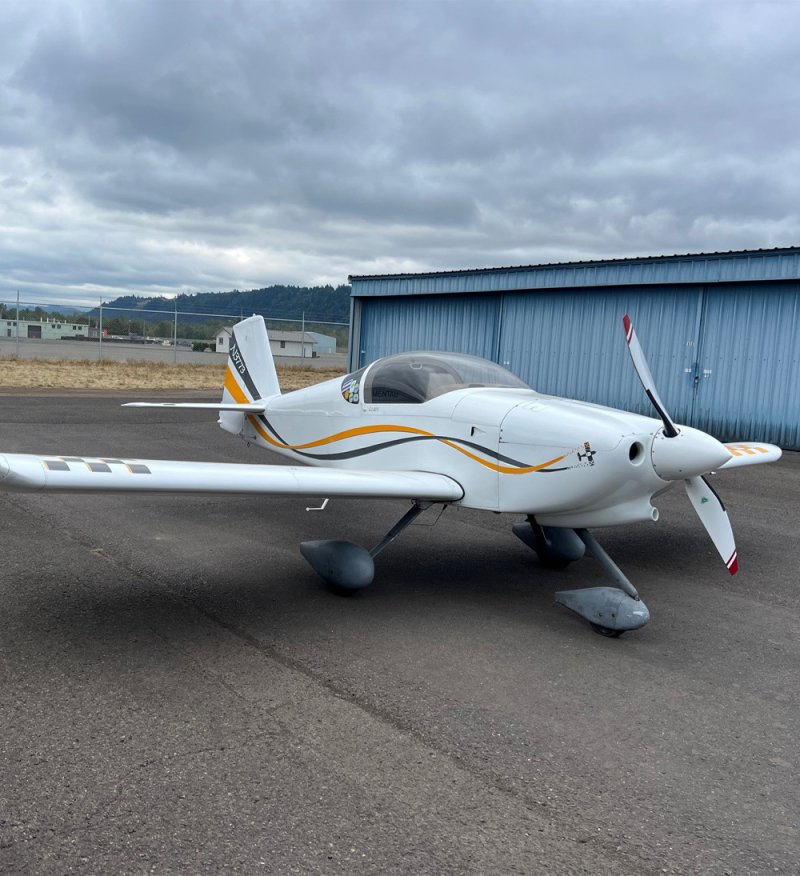
I never really thought of myself as operating a machine. My aircraft felt like an extension of me. There was an almost instinctive connection between us, something that is difficult to articulate to someone who has never experienced it.
I knew my plane. I felt it. Together, we flowed.
Flying was freedom.
It was my escape from the harsh realities of life. It was where I could disconnect from everything else and be entirely present. The irony, perhaps, is that an activity requiring such concentration, discipline, and responsibility was the very thing that allowed me to find peace.
For as long as I can remember, aviation has been part of who I am. From my 12 years in the Royal Air Force to my years of flying as a civilian, it has been a constant in a life that has otherwise seen considerable change.
I never imagined there would come a day when I would have to fight to return to that place.
Nor did I imagine that, after four years of fighting, I would lose.
In July 2026, an administrative law judge denied my appeal to regain my FAA medical certificate.
To understand why I fought so hard, you first need to understand that I wasn't fighting for a piece of paper.
I was fighting for a part of myself.
Four years of searching for answers
My journey began with a historical diagnosis of narcolepsy and cataplexy, a diagnosis that would ultimately stand between me and my ability to fly.
I wasn't prepared to accept that diagnosis without further investigation, particularly as subsequent medical evidence began to challenge it.
Over the course of four years, I underwent further medical evaluations, repeat overnight sleep studies and daytime sleep latency tests, and sought the opinions of independent medical specialists.
Two subsequent sets of sleep studies did not meet the diagnostic criteria for narcolepsy. Three medical specialists provided opinions supporting my position that I did not have the condition.
Under medical guidance, I also discontinued the medications I had previously been prescribed.
I believed the evidence was compelling.
What I came to understand, however, was that demonstrating that I did not currently meet the diagnostic criteria for a condition was not necessarily the same as establishing, to the satisfaction of the FAA and ultimately the court, that the original diagnosis had been incorrect.
That distinction would ultimately prove decisive.
I fully appreciate the FAA's responsibility for aviation safety. Having spent much of my life in aviation, I understand the importance of that responsibility and would never advocate for compromising it.
Had the subsequent medical evidence supported the original diagnosis, I would have had a very different decision to make.
But it didn't, and I felt I had both the right and the responsibility to challenge it.
Preparing for the fight
I don't think I fully appreciated what I was taking on when I decided to challenge the FAA's decision.
Representing myself before the National Transportation Safety Board meant immersing myself in medical literature, legal precedent, procedural requirements, evidentiary rules, and the complexities of aviation medical certification.
There were countless evenings and weekends spent reviewing documents, preparing submissions, constructing arguments, and anticipating questions.
There were moments of optimism, moments of considerable frustration, and moments when I questioned whether I had the energy to continue.
Interestingly, artificial intelligence became an important companion throughout that process. I used it to challenge my reasoning, organize evidence, prepare rebuttals, rehearse testimony, and explore arguments from the opposing perspective.
It didn't replace my judgment, nor was it my attorney, but it gave me a means of working through an extraordinarily complex process.
It also gave me somewhere to put my thoughts when the emotional weight of the case became difficult to carry.
Throughout the preparation for the hearing, I kept returning to three things: telling the truth, maintaining my composure, and trusting the medical evidence.
Whatever the outcome, I wanted to walk out of that courtroom knowing that I had conducted myself with integrity.
When the fight became personal
On July 7, 2026, I appeared before an NTSB administrative law judge in San Francisco.
I entered the courtroom expecting to defend my medical position. I had prepared extensively to discuss the results of my sleep studies, the opinions of my physicians, and the medical literature that supported my case.
What I was less prepared for was the extent to which I felt I was defending my character rather than my medical fitness.
Much of the FAA's questioning, from my perspective, appeared directed toward undermining my credibility and personal integrity.
I understand that challenging the credibility of a witness is part of an adversarial legal process, but understanding something intellectually does not necessarily make it any easier to experience personally.
Having spent 12 years in the Royal Air Force and much of my subsequent career in positions of leadership and trust, integrity is something I hold particularly dear.
I was prepared to have my medical evidence challenged. I was prepared to have my interpretation of that evidence questioned. What I found considerably more difficult was the feeling that my honesty was on trial.
There were moments during and after the hearing when the emotional weight of that experience became overwhelming.
I don't say that to elicit sympathy. I say it because we don't often talk about this side of fighting for something that matters to us.
We tend to talk about perseverance, resilience, and determination, but rarely about what those things actually cost.
And sometimes, despite all of them, we still lose.
I think there is a legitimate conversation to be had about how individuals are treated when they exercise their right to challenge an administrative decision.
There is a human being on the other side of that process. Someone with a life, a history, a family, and something that matters deeply to them.
I wonder whether, somewhere along the way, that gets forgotten.
The decision
The following day, my appeal was denied.
The judge determined that I had not provided sufficient evidence to establish that the original diagnosis was incorrect.
It was not the outcome I had hoped for, nor the outcome I believed the medical evidence warranted.
But the judge had a job to do, within an established legal and regulatory framework. I can't fault him for doing that job.
I can, however, question whether a framework that places such considerable weight on historical diagnoses adequately accommodates the evolution of medical knowledge, subsequent objective testing, and independent medical opinion.
Medicine is not infallible. Diagnoses can be wrong. Our understanding of medical conditions evolves.
I believe there needs to be a meaningful and achievable pathway for individuals to demonstrate that a historical diagnosis may no longer accurately reflect their medical status.
Aviation safety and the willingness to reconsider historical medical conclusions should not be mutually exclusive.
I walked out of that courtroom with the same conviction about my medical condition that I had when I walked in.
What had changed was my ability to do anything meaningful about it within the process I had just completed.
Knowing when to stop
Following the decision, I considered my options.
I could pursue further medical testing. I could explore additional legal avenues. I could potentially spend another four years trying to achieve a different outcome.
But at what cost?
I'm 63 years old. I'm approaching retirement. My husband and I have plans for the next chapter of our lives, and there are experiences ahead of us that I don't want to sacrifice in pursuit of an outcome that may never come.
Perhaps the most unexpected emotion I experienced after losing the case was relief.
It was over.
For the first time in four years, I no longer had another submission to prepare, another deadline to meet, another medical opinion to seek, or another argument to construct.
I had to ask myself whether continuing the fight would serve me, or whether I was simply unwilling to accept that I had lost.
There is a difference between giving up and making a conscious decision that something has taken enough from you.
I've chosen to stop.
That doesn't mean I agree with the outcome. It doesn't mean my conviction about my own medical condition has changed. It means I've decided that the remainder of my life deserves more of my attention than this fight.
I've spent much of my professional life solving problems. I've built a career around the belief that with enough diligence, evidence, determination, and sound judgment, most problems can be overcome.
This experience has challenged that belief.
Sometimes you can do the work, prepare meticulously, present the evidence, act with integrity, and still not achieve the outcome you believe is right.
That's a difficult lesson, even at 63.
The loss I hadn't yet felt
Something rather unexpected has happened in the process of writing this article.
It is now November, several months after the hearing, and until today, I don't think I had fully experienced the loss of flying.
I had experienced frustration. I had experienced anger, disappointment, and the emotional consequences of the hearing itself. I had experienced the relief of knowing that the fight was over.
But today, as I began to articulate what flying actually meant to me, I felt a profound sense of loss and sadness that I hadn't experienced before.
For four years, I had been focused on getting back into the cockpit. There was always something to do, something to challenge, something to investigate, and something to hope for.
Perhaps fighting to preserve something had occupied so much of my emotional energy that I hadn't really allowed myself to contemplate life without it.
Even after the hearing, my thoughts were largely about the process, the outcome, and whether I should continue.
Today was different.
In working with AI to help me write this article, I was asked a surprisingly simple question.
What did flying mean to you?
Not what the medical evidence said. Not what happened in the courtroom. Not whether I thought the decision was fair.
Just what flying meant to me.
And in answering that question, I found myself reconnecting with something that I had spent four years fighting to preserve, but had perhaps not spent enough time acknowledging that I had lost.
I remembered the freedom. The peace. The connection with my aircraft. The feeling of being above the world and, for a few precious hours, being free from its demands.
I remembered what it felt like to flow.
And for the first time since losing my case, I think I began to understand the magnitude of what I had lost.
The legal fight ended in July.
Perhaps the process of grieving that loss has only really begun today.
Learning to live with the loss
Towards the end of my flying, I knew there was a possibility that I was approaching my last flight. I just didn't know which flight it would be.
I didn't want to think about it.
Every time I climbed into the cockpit, I wanted to experience what I had always experienced. The freedom, the connection with my aircraft, the ability to disconnect from the world below and simply flow.
I didn't want to spend those precious hours contemplating a future without them.
The thought of losing a bond that had been with me for decades was simply too painful.
And perhaps, somewhere deep down, I believed that if I fought hard enough, I would never have to confront that possibility.
Yet here I am.
I suspect I will always look up when I hear an aircraft overhead. I will always look at the clouds a little differently, imagining what the world looks like from above them.
Perhaps part of me will always be in that cockpit.
What I miss is not simply the ability to fly. I miss the silence that existed amidst the noise of an aircraft engine. I miss the feeling of being completely connected to something while being disconnected from everything else.
I miss the flow.
I'm still learning how to reconcile that loss. I don't think there needs to be a neatly packaged conclusion to this story, nor do I feel compelled to find a silver lining in everything that has happened.
Some losses simply need to be acknowledged.
I can accept the outcome without agreeing with it. I can respect the importance of aviation safety while questioning the process I experienced. And I can choose to stop fighting without regretting that I fought.
I gave four years of my life to trying to return to the sky. I did so because I believed in the medical evidence, because I believed in myself, and because flying meant that much to me.
Would I do it all again, knowing what I know now?
I think I would.
Losing a fight is not the same as being wrong to have fought it.
I would have regretted not trying.
For decades, flying was where I went to escape the harsh realities of life. Now, losing the ability to fly has become one of those realities.
There is a certain irony in that.
I don't know when, or even if, I will fully come to terms with it. What I do know is that the years I spent flying, the freedom I experienced, and the bond I shared with my aircraft will always be a part of me.
No administrative decision can take those experiences away.
I lost my medical.
I lost my fight to get it back.
But I will never regret having known what it feels like to fly.

Comments
No comments yet - start the conversation.
Log in to join the conversation.
Log in Create an account